Understanding Prop Trading: Unlocking Financial Opportunities

Understanding Prop Trading: Exploring Its Meaning and Nuances
In today's fast-paced finance and cryptocurrency scenes, proprietary trading—commonly referred to as prop trading—stands out as a distinctive part of market activity. While the term may sound a bit daunting, its true essence reveals an intriguing mix of strategy, risk, and potential reward. In this article, we’ll explore what prop trading means, its significance, and the roles it fulfills in both traditional finance and the rapidly evolving world of crypto markets.
What is Proprietary Trading?
Proprietary trading, or prop trading, takes place when a financial firm or commercial bank trades stocks, bonds, currencies, commodities, or other financial instruments using its own money instead of acting on behalf of clients. This approach allows firms to leverage their capital, aiming to generate profits that can be significantly higher than what they might earn through traditional commission or brokerage fees.
Key Features of Prop Trading
To truly grasp what prop trading entails, it’s important to spotlight its key characteristics:
- Ownership and Control: Firms utilize their own funds, granting them complete control over trading decisions.
- Strategic Flexibility: Without client constraints, these firms can embrace a variety of strategies, from quantitative models to discretionary approaches.
- Enhanced Profit Incentives: Any profits made remain with the firm, providing a strong motivation to maximize returns.
- Risk Exposure: The potential for high rewards comes with increased risks, as firms put their own money on the line.

The Role of Prop Trading in Crypto Markets
As cryptocurrencies gain popularity, prop trading has taken root in these volatile yet promising markets. The decentralized nature of cryptocurrencies, coupled with the rapid development of blockchain technology, has made prop trading an attractive method for maximizing returns.
How Prop Trading Works in Cryptocurrency
- Market Analysis: Firms harness advanced tools to dissect market trends, including technical analysis, sentiment analysis drawn from social media, and real-time data analytics.
- Strategy Development: Using the insights gained, firms craft strategies that may incorporate high-frequency trading, arbitrage, or long/short positions.
- Execution: Trades are performed on centralized exchanges (CEX) like Binance and decentralized exchanges (DEX) such as Uniswap.
- Monitoring and Adjustment: Continuous tracking allows firms to adjust their strategies in response to shifting market conditions.
Advantages in the Crypto Space
- Volatility: The inherent volatility of cryptocurrencies creates numerous opportunities for profit.
- Liquidity: The emergence of CEX and DEX platforms has significantly boosted market liquidity, which is key for executing large trades efficiently.
- 24/7 Market: Unlike traditional exchanges, crypto markets operate around the clock, offering endless trading opportunities.
Challenges Faced by Prop Traders in Crypto
- Regulatory Uncertainty: A constantly changing regulatory landscape can have a big impact on trading strategies.
- Security Risks: Cybersecurity threats pose serious risks to both funds and data integrity.
- Market Manipulation: The relative youth of the crypto markets makes them more vulnerable to price manipulation.
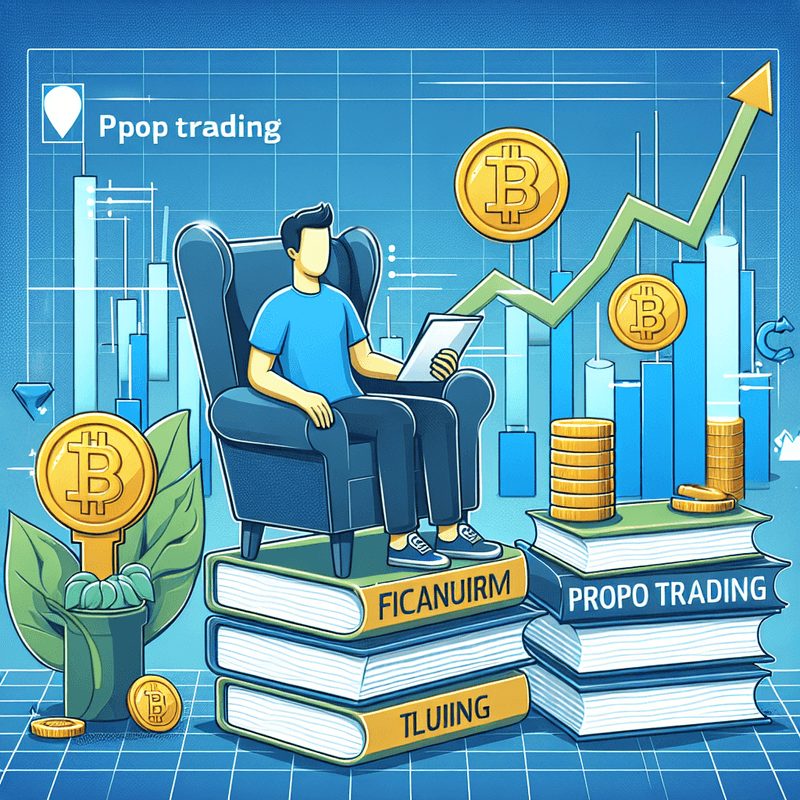
Tools and Technologies Enhancing Prop Trading
To maintain a competitive edge, prop trading firms are increasingly incorporating advanced technologies. A prime example is CrewDegen, a fully autonomous multi-agent trading system. This sophisticated tool gathers and analyzes news and technical data through various AI agents—each specializing in different tasks, like sentiment analysis and indicator evaluation. By taking advantage of platforms such as OpenAI and Gemini, CrewDegen makes independent trading decisions and executes them automatically on both CEX and DEX platforms.
Comparative Table: Traditional vs. Crypto Prop Trading
| Feature | Traditional Prop Trading | Crypto Prop Trading |
|---|---|---|
| Market Hours | Fixed trading hours | 24/7 trading environment |
| Volatility | Moderate | High |
| Regulation | Well-established | Still evolving |
| Liquidity | High in established markets | Improving with CEX and DEX |
| Technology Use | Increasing | Core to strategy development |
Prop Trading Strategies
To fully understand the meaning of prop trading, let’s take a look at some commonly employed strategies:
Common Strategies in Prop Trading
- Arbitrage: Taking advantage of price discrepancies across different markets or instruments.
- Market Making: Providing liquidity by quoting both buy and sell prices.
- High-Frequency Trading (HFT): Using algorithms to execute numerous trades in the blink of an eye.
- Trend Following: Analyzing long-term trends to guide trading decisions.
Advantages of Various Strategies
- Speed and Efficiency: Particularly in HFT, timing is everything; firms can capitalize on tiny price shifts.
- Risk Management: Strategies like arbitrage can mitigate risk by hedging across multiple markets.
- Market Influence: Market makers play a crucial role in influencing liquidity and stabilizing prices through their activities.
Developing a Prop Trading Strategy
Creating a winning prop trading strategy involves several stages:
- Research and Development: Identifying potential opportunities and building models.
- Backtesting: Evaluating strategies against historical data to determine their effectiveness.
- Implementation: Putting the strategy into action with real capital.
- Evaluation and Adjustment: Continuously monitoring performance and refining the strategy as needed.
Conclusion: The Future of Prop Trading
As financial markets evolve, the meaning of prop trading continues to expand—especially with the rise of cryptocurrency markets. The integration of cutting-edge technologies like AI and machine learning is reshaping the landscape of prop trading, bringing new opportunities and challenges. With tools like CrewDegen empowering fully autonomous trading, the future of prop trading is set to transcend traditional boundaries and explore new frontiers.
Understanding prop trading and its implications in the crypto sphere requires recognizing the importance of strategic flexibility, technological know-how, and a sharp awareness of market dynamics. As both traditional and crypto markets develop, prop trading remains a vital, if intricate, element of today’s financial ecosystem.